

According to specialist lender Together, a third of Brits would sacrifice part of their garden if it meant they could self build on the land. Based on a new survey, the data indicates that over 34% would take on a major self-build, with a mix of motivations. Of those surveyed, 14% said this would create a home for a family member, 10% would build a house they would sell and 8% would move in themselves.
According to the survey, 26% of respondees were interested in creating a standalone ‘granny annexe’ for visiting friends or family, if they had the space. Many attributed this desire due to the way in which the pandemic forced us to reconsider how we interact with our extended families.
One in ten also said that the boom in popularity for staycations offered an opportunity to rent such a garden build out as a short-term holiday let, while 8% said they were interested in long-term lets.
But it’s not just big builds that people wanted in their garden, with a fifth (20%) of respondents saying they’d be keen to build a summerhouse or workshop to create their perfect space.
Scott Clay, distribution development manager at Together, said: “Our survey highlights homeowners’ ambitions as we begin to return to a different kind of normality.
“People are thinking more creatively about how they could use their outside space, whether that is providing a standalone home office, a home for themselves to live or sell, or a specially-designed home for elderly or disabled relatives.
“It’s important that homeowners have enough space and get any required building consent, including planning permission, before they take on a self-build. They will also need a lot of planning, determination, and the right finance in place before they start their project.
“However, as well as Help to Build, there are other options of funding your own build, depending on the borrower’s ability to repay the loan. This could be through an advance from an existing lender, a self-build mortgage, or a remortgage, bridging loan or other types of property finance from a specialist lender.â€
Duncan Hayes, a spokesperson for the National Custom and Self-Build Association (NaCSBA) said: “When considering options for garden plots it is important to understand the approach of the local planning authority. The right proposals in the right areas can help with the delivery of better and more sustainable homes that we urgently need.
“Care is needed as many will have specific policies to prevent inappropriate development of gardens that may cause harm to the local area. NaCSBA recommends that anyone wanting to build should sign their local self-build register and check out the planning policies on their local council’s website in regard to creating new dwellings in a garden.â€
Andrew Baggot, managing partner and chartered accountant at Clarke Nicklin, adds: “As far as tax is concerned there are a few matters to bear in mind with a self-build project. As well as the tax benefits, there shouldn’t be any Stamp Duty Land Tax (SDLT) to pay on the self-build, on the basis that it is being built in the owner’s own garden.
“However, one tax that might need to be considered in more detail is Capital Gains Tax (“CGTâ€). Your primary home is exempt from CGT. Although, as soon as you’ve acquired a self-build home you then have two properties, only one of which can be exempt from CGT. It’s therefore important to plan ahead if you’re then thinking of selling one of the properties so that you minimise any tax that might become payableâ€.

A new Help to Build equity loan scheme was announced in the Comprehensive Spending Review, another green light for those wanting to custom or self build, says the National and Custom and Self Build Association (NaCSBA).
The new scheme was announced as part of a package of measures to support more people to build more sustainable and more beautiful homes.
Important for anyone considering a custom or self build, the Comprehensive Spending Review made two important announcements:
As yet, there are no firm details about the format or timescale of the Help to Build scheme. However, NaCSBA will be working with the Ministry of Housing, Communities and Local Government to feed into the design of the scheme. NaCSBA has been lobbying for a Help to Build scheme for several years, so welcomes the announcement.
Currently, it is expected that the Help to Build will be an equity loan scheme along the lines of Help to Buy, but with the loan subsidising the mortgage lender, rather than the house builder, as with Help to Buy. However, for now the details remain uncertain.Â
The Help to Build will help more people self build who would otherwise struggle to finance a build, great news for the third of people who want to self build, the result of recent research by NaCSBA and the Building Societies Association.
Of these 1 in 3 interested in self building, 59% of respondents said that access to finance remained the most significant barrier preventing them from self building. Help to Build should help remedy this, and make a real difference to the younger age groups where there was the interest in self build was strongest.
NaCSBA also welcomed the news of further funding, especially to support the release of public sector land for serviced plots. Access to suitable land remains a challenge, as acknowledged by 42% of those surveyed in NaCSBA’s recent research.
Public sector land is land held by councils, government and large institutions, and a commitment to bring some of this land to market for plots could provide a valuable route to land.
Access to plots and ability to secure finance have traditionally been significant challenges for anyone wanting to self build, and these announcements reflect government’s ambition to support more people in their ambition of having an owner-commissioned home.
Andrew Baddeley-Chappell, NaCSBA CEO, said: “The announcements today, together with those on Right to Build Day, make it clear that the Government is fully committed to do more to increase the diversity of choice in our new homes market.
“Greater choice will lead to great innovation and competition that will lead to more and better homes. We hope to see the new Help to Build scheme up and running as soon as possible together with the additional wonderful, affordable sustainable, uplifting new homes that it will help deliver.â€
Help to Build will only be available in England, but Wales already has Self Build Wales, which includes a loan for anyone wanting to self build.
Find out more in Build It magazines interview, or at the scheme’s hompage: Self Build Wales.
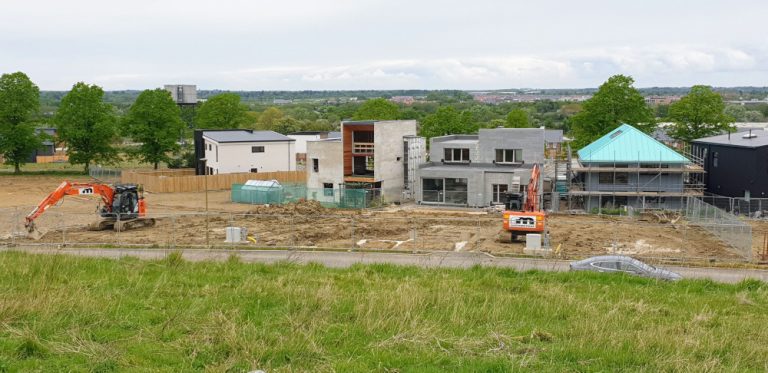
Stef and Pauline commissioned lapd Architects to work on their build at Graven Hill. The vision was to create a South African-inspired home in Bicester that could make the most of the summer time in the UK.
Ideas like this are often the starting point for great design. Stef and Pauline had been pondering what kind of a home they would like to live in, where they might build that home, and what their key must-haves were for years by this point. That thinking paid off when it came to those first crucial steps along the journey towards their dream self-build home.
Stef and Pauline got in touch with the team at lapd Architects after a rocky start with another company, where they felt that their self-build was heading in the wrong direction.
The couple booked in a free initial consultation, chatted with Opinder, one of the directors at lapd, and began to get an idea of the reality of the self-build process and how to get started.
With the help of the team at Graven Hill, they had reserved a plot with beautiful views, and things were beginning to move in the right direction.
With the plot reserved, the process was underway, and Stef and Pauline were out of the starting blocks in terms of turning their dream of self-build home into a reality. A crucial first step for any would be self builders is to ensure that the your architects understand exactly what it is that you want, and why. This buy-in is crucial to ensure that everything is clear from the get go, and that the professionals you choose to work with are on the same wavelength from the outset.
 The collaborative design process with lapd
Following the initial meetings, a concept design was drawn up, with lapd Architects creating 3D Lumion images, for the first time rendering the couple’s vision into a tangible set of drawings. This is the real value in using professionals, as they are can translate dreams into something that can actually be built.
The South African concept of a pyjama lounge (a sort of snug) is the main living space, and takes pride of place on the first floor. It has been designed to command beautiful views of the surrounding area through a striking front gable.
At the back, the kitchen opens onto a patio with an outdoor kitchen, extending the usable space and make the most of long summer nights – perfect for entertaining. Lifestyle and design go hand in hand, and every room in a self-build should be designed around the self-builder’s day to day life as well as their own personal taste in design.
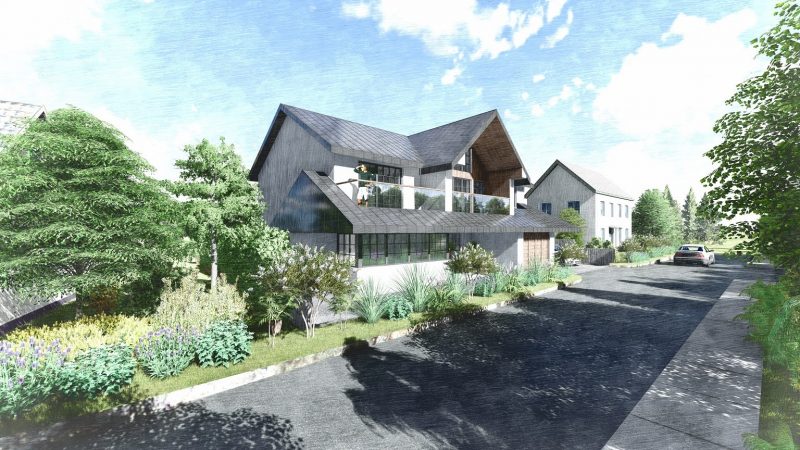
Stef and Pauline’s 3D images for their Graven Hill self-build
The concept drawings are key to refining the design, and the initial images rarely reflect the final product. This stage marks the beginning of a conversation, across several meetings, where the design is refined to meet the clients’ needs.
Getting the working relationship with the professionals gives self builder the confidence to make the decisions that are most important to them, to help them get the home they truly want.
Graven Hill plots come with a document called a Plot Passport, which sets out any restrictions on the plot, such as design limitations or positioning. Once Stef and Pauline were happy the design was submitted for plot passport compliance (a Graven Hill specific process).
This was then accepted by the local authority and the team at Graven Hill. One of the benefits of building at Graven Hill is that this process is much simpler and quicker than your normal planning application.
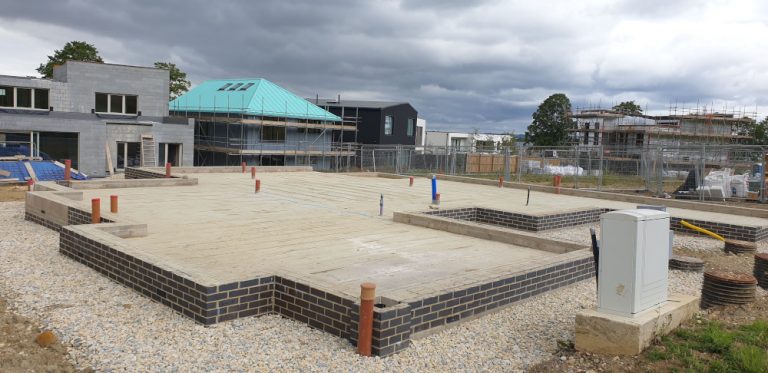
The next stage for Stef and Pauline is the Golden Brick process, where the foundations are constructed and the plot is handed over – another unique feature of building at Graven Hill.
If you would like to talk to lapd about exploring the option of self-building, either at Graven Hill or elsewhere, then get in touch, as lapd Architects offers a free initial consultation via zoom. Or check out lapd’s checklist for building at Graven Hill.
Alternatively, if you are considering self-build, and want some more information, why not visit the award-winning Build It Self-Build Education House? This first of its kind project allows you to explore a real self-build, and see what it actually looks like, helping you to think through your dream project.
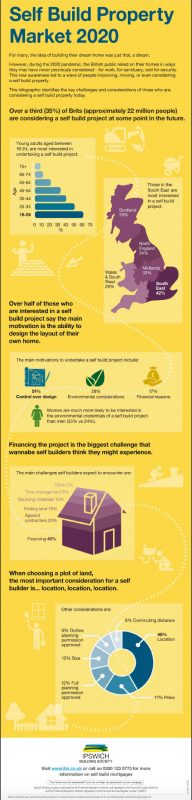
Celebrating Right to Build Day, the Ipswich Building Society conducted its own research into the custom and self build market. Like NaCSBA and the Building Societies Association’s survey, the Ipswich’s asked 2,000 people about their aspirations and understanding of the custom and self build sector, prompted by the way the pandemic has changed the way we see our homes.
Like NaCSBA’s research, the main finding was that 35% of UK adults (approximately 22 million people) said they would consider a self build project at some point in the future. The NaCSBA/BSA research found a similar figure, that 32% of people were interested in self building – adding empirical weight to the data.
The research found that:
Charlotte Grimshaw, Head of Mortgage Sales at Ipswich Building Society said: “Since the introduction of government legislation on 1 April 2016, self build projects have become a more recognised and viable choice for many people.
“However, finding the perfect plot of land is still something that self builders are concerned about. The introduction of Right to Build was a significant step for this often overlooked sector and with the UK having the lowest known rates of self build homes in the world, coupled with a substantial shortage of homes, local councils would do well to promote these registers more tenaciously, to ensure a continual supply of suitable plots.â€
The Ipswich Building Society commented that those planning to embark on a self build project should be aware of the classification of their build with regards to their mortgage application. This research reveals that more than half (52%) of people were unaware they would need a self build mortgage and not a standard residential mortgage for the major renovation of any property or self build project.
Ipswich Building Society advises that if the mortgage applicant has to live in a separate dwelling during the build, or if major renovation work leaves a property without kitchen and/or bathroom facilities for an extended period of time, this would usually fall under most lenders’ criteria for self build.
However, as self build mortgages are more complex than a standard mortgage application, it can be advisable to seek guidance from a mortgage intermediary who has experience in this area.
Head to the National Self Build and Renovation Centre for its show on Friday 16-Sunday 18 October, which is one of the few shows still running a live event.
The National Self Build and Renovation Centre is a permanent exhibition space dedicated to self building, with permanent stands and educational exhibits helping you to navigate the process of self building or renovating a home.
The show is the ideal event to meet experts and see and test products in a spacious and relaxing setting – with measures in place to ensure social distancing requirements are met.
The show offers something for everyone, no matter what stage you are at with your project – whether you are still at the early planning stage or part way through.
The centre has experts on hand with offering a range of advice, from finding a plot and arranging your finances to deciding on the best building method for you. As well as lots of information about heating systems, green building and more.
When: Friday 16th – Sunday 18th October
Time: Fri & Sat: 9:00am – 5:00pm; Sun: 9:00am – 4:00pm
Where: NSBRC, Just off M4 Junction 16, Swindon, SN5 8UB
Tickets: Free in advance, £12 on the door.
Special measures have been put in place to ensure the NSBRC and show safeguard its visitors, exhibitors and staff. It is working hard to ensure it complies with current guidelines and as such this show will be a little different from previous events.
In order to maintain social distancing, the centre is reducing the capacity of the event and requires all attendees to book in advance on this occasion. Tickets are limited to a maximum of 2 adult members per household, and children must remain with their parents at all times.
Additional measures have been implemented for the safety of all, which will be explained on the day.
On 19 and 20 September, Bicester-based self and custom build development site, Graven Hill, will be talking all things self-build at Build It Live.
The event is going virtual this year, taking place entirely online. From the comfort of your own home, you’ll experience a whole weekend full of inspiration, interviews and top tips from a range of experts.
Graven Hill has a long-running partnership with hosts, Build It, having opened the Build It Education Hub in November 2019. Home to the site’s Marketing Suite, the Hub is a self-build project itself, giving visitors the opportunity to learn about the various aspects of building their own home, including product choice, design, and construction methods.
These are just some of the many topics Graven Hill will be exploring during the virtual event, with attendees able to book live one-to-one chats or video calls with the team throughout. Whether you want to discuss plot availability, financial options, or just have a burning question, the Graven Hill experts will point you in the right direction to making your dream home a reality.
There will be an interview with self-builders, Zakima and Sam Omotayo, as well as Graven Hill’s managing director, Karen Curtin, at 1.10pm on the Saturday. They will be speaking about why Graven Hill was right for them, their self-build process, and offering advice to prospective self-builders. This will also include a live Q&A, so attendees can ask any questions they may have to people who have experienced self-building first-hand.

Self Builders Sam and Zakima Omotayo
Zakima and Sam, said: “Being able to share our self-building journey with an audience of like-minded people is something we’re really looking forward to. Our experience at Graven Hill has been so rewarding, and if we’re able to inspire others to take the plunge then that’s the cherry on the cake.
“Self-building is an option that people rarely consider in the UK, but we’d love to see that change. We now live in a home that reflects our style and needs, and we are very happy.â€
For those unsure about whether self-building is right for them, the Graven Hill team will also be able to explain the site’s custom build new homes. These take the ease of a conventional new build and combine it with the personality of a self-build. Perfect for people who want a unique home without the heavy lifting.
Eligible for Help to Buy, custom build new homes are also accessible to all, including those aiming to get a foot on the housing ladder.
Karen Curtin, managing director of Graven Hill, said: “The UK has yet to fully embrace the concept of self and custom building, and Build It Live gives us the opportunity to spread the word about its potential, as well as quash certain misconceptions. At Graven Hill, our aim is to provide an accessible route to building your dream home, something that is often dismissed due to time and cost.
“This year’s event may be virtual, but we’re certain it’ll inspire a whole new set of budding self-builders to give creating a home that fits their every need a try.â€
Whether you’re looking to start a self-build project of your own or are just curious about what Graven Hill has to offer, make sure to book your place at Build It Live. For exclusive offers, speak to the site’s sales team during the show.
Land promoter Leaper Land has submitted an outline planning application for a 65-plot site on the edge of the village of Child Okeford. Routes to home ownership at Child Okeford include self-build, custom-build and custom-choice, with the custom-choice built to a shell stage, at which point it is handed over to the purchaser.
Routes to ownership at Child Okeford:
Self-build individuals buy a serviced plot, with details of what is allowed to be built set out in a design code and with a palette of materials to choose from. As the design code is pre-approved for planning, permission is guaranteed as long as your build meets the conditions set out in it. Buyers can also choose to project-manage themselves or commission a developer or housebuilder to build the home.
Custom-build with this model, you buy the plot, with the design code setting the context, and contract directly with a developer to build the house. On this scheme, this route offers less of flexibility as there is a choice of designs with pre-prepared layouts and specification options that are approved by planning.
Custom-choice this option involves a developer building your home to the wind-and-watertight structure shell, at which point you take over to commission the remaining jobs. Buyers will pick from a range of interior layouts and specifications.
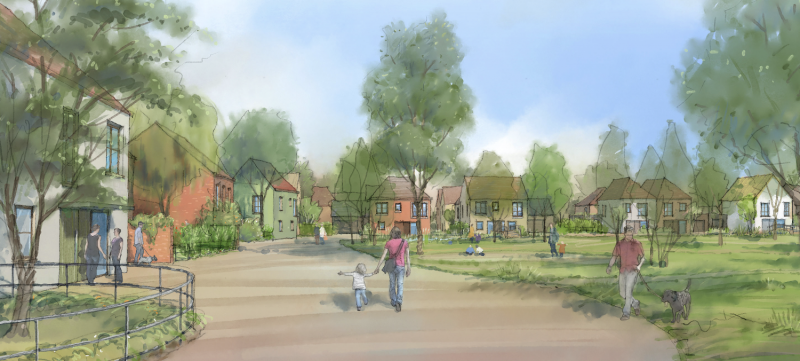
Street view of Child Okeford scheme
While the self and custom build routes offer stamp duty savings and exemption from the Community Infrastructure Levy, custom choice enables people to access regular mortgages and Help to Buy. This extends the site to a greater number of buyers.
The homes are controlled by a design code, which is quite strict as it sets the context for the development, in response to the rural nature of the site. This gives the buyers choice, such as a range of materials, shown below, but by controlling this through a design code it ensure the designs are in keeping with the village.
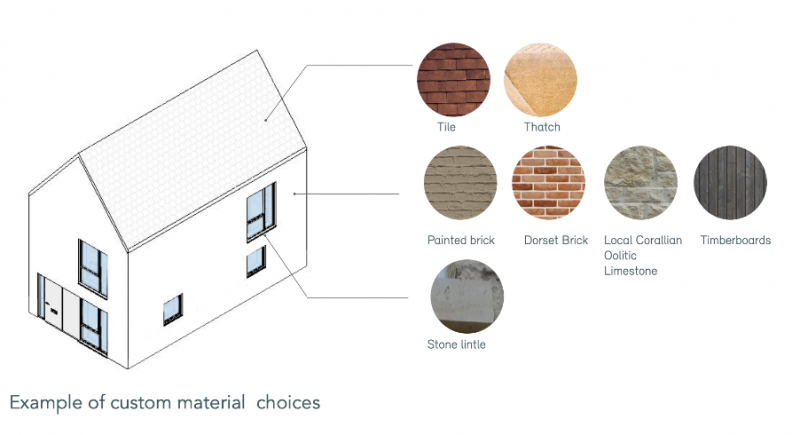
Child Okeford custom build homes – material palette showing choice for exterior materials
“Design codes are really important as they offer reassurance to both the planners and the local community that something of quality will be built. So residents can choose from a palette of materials, for example, all of which could be seen on buildings in the village, helping the scheme at Child Okeford fit in,†said Ben Marten, Director of Leaper Land.
Bringing forwards land for development is costly and time consuming, which is where a land promoter comes in. They act on behalf of the landowner, using their skills and knowledge to secure a planning application.
As such, land promoters can help unlock small parcels of land that otherwise might not come forward. This may be because these sites are too small for big developers to be concerned about, but too costly or time consuming for an unexperienced landowner to bring forward by themselves.
Therefore, they are an ideal solution if you are a farmer or other small landowner who sees potential in their site, but are not sure how to proceed. Typically, their costs are based on results, which makes them a good choice for such landowners.
If you are planning to build, sign up to your local Right to Build register – you can find out the details on the Right to Build Portal.
Once planning is granted they will be in touch with more information and expected times for plots to come to market.
Images: Pollard Thomas Edwards/Leaper Land